Montessori basics
What Montessori early learning actually looks like day to day
· 5 min read
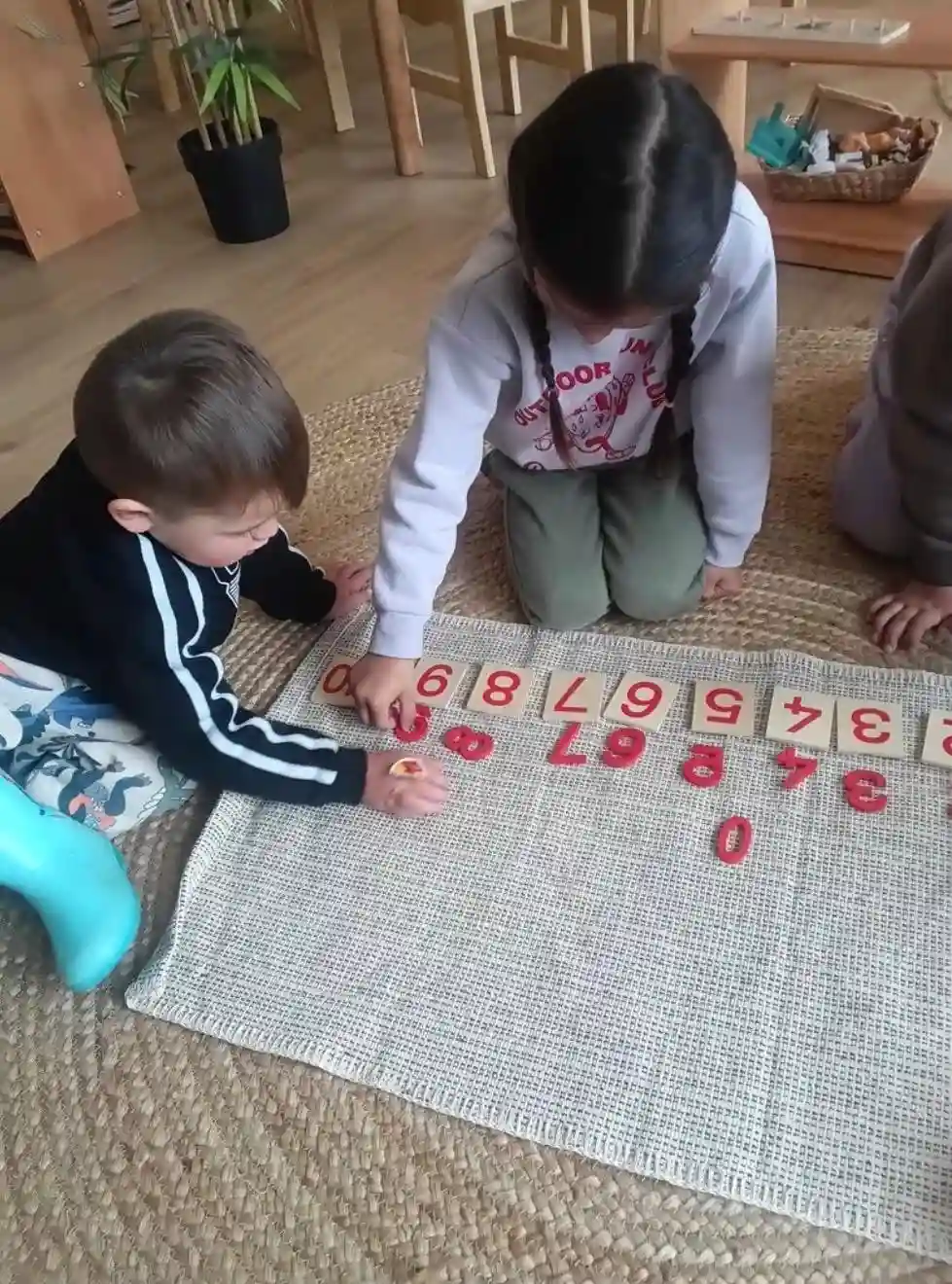
Montessori is often described in abstract terms. Here is what it actually looks like inside a room full of two and three-year-olds.
The prepared environment
Everything a child needs sits at their height, in a logical order, ready to use. Learning stations cover practical life, sensorial work, language, numeracy and culture.
That arrangement is deliberate. When a child can reach a tray, carry it to a mat, use it and return it, they are practising independence dozens of times a day without anyone instructing them.
The work cycle
Children choose their own work and stay with it as long as it holds them. Long, uninterrupted stretches are where concentration grows.
Educators observe closely and offer a lesson at the moment a child is ready for it — rather than moving a whole group through the same activity at the same time.
Following the child
Every child is different and needs an individual support system for their growth. In practice that means a two-year-old who is fascinated by pouring gets more pouring, with more challenge each time.
It also means noticing when something is hard, and quietly building the underlying skill before returning to the activity.
Want to see it in practice?
Book a tour of our Shepparton centre and watch a Montessori work cycle unfold.